
Car seat foam replacement is the job owners least expect to need. Almost every enquiry starts the same way: the seat looks bad, so it must need a new cover. Sometimes that is right. Often the real problem is underneath, and knowing the difference before you phone anybody will save you money.
Here is how to work out whether you need car seat foam replacement or only a new covering, using nothing more than your hands.
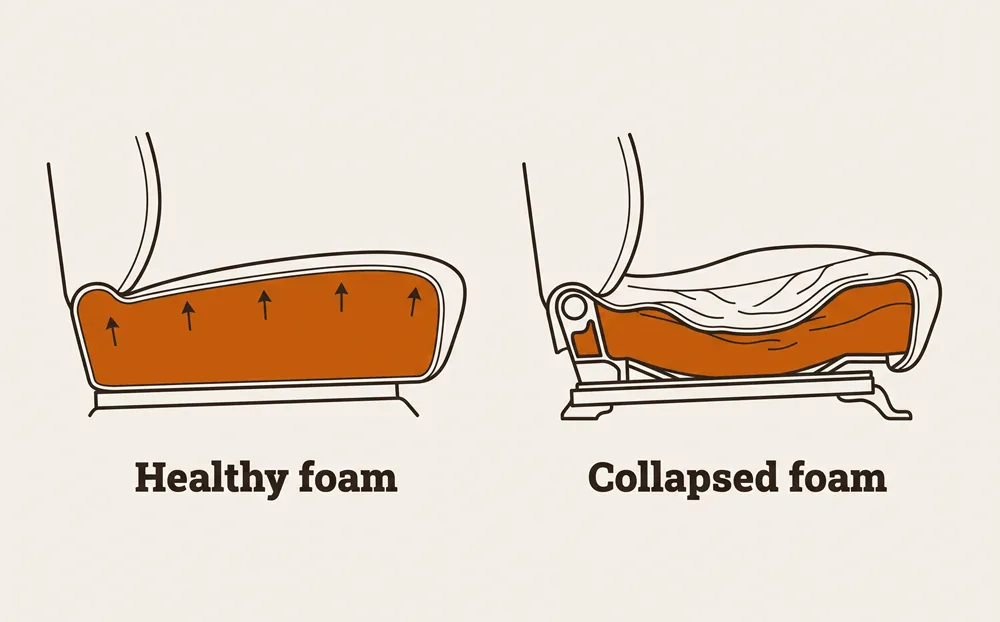
The two minute test
Sit in the seat normally for about thirty seconds. Get out, and watch the cushion.
- It springs back to its original shape. The foam is sound. If the covering is torn or faded, a re-cover is all you need.
- It comes back slowly, or not all the way. The foam is on its way out. You can re-cover it, but expect the seat to feel soft and look low sooner than you would like.
- It stays compressed, or you can feel the frame. The foam has collapsed. Replace it. A new cover on its own is money thrown away here.
Then run your hand across the surface. Grit or crumbs where the foam meets the covering usually means the foam is breaking down rather than merely compressing. That is a replacement, not a repair.
Why a new cover over dead foam disappoints
A seat covering is not a loose bag pulled over a cushion. It is stretched, and it depends on firm foam pushing back from underneath to hold its shape. Take that support away and three things follow.
The cover wrinkles, because nothing is holding it taut. The seat sits visibly lower than the one next to it. And the new material wears through early, because it is flexing on every journey at points that were meant to be supported. You get a seat that looks worse than it should after a few months, and the work has to be done again properly.
Car seat foam replacement: not all foam is the same
Foam is sold by density, and density is what determines how long it lasts under repeated compression. Low density foam feels comfortable in the showroom and flattens within a season of daily use. High density foam feels firmer at first and holds its shape for years.
For a seat that gets used every day, high density is the only sensible choice. The difference in material cost is small next to the labour of doing the job twice.
What about the springs and the frame?
On older vehicles and on furniture, the failure is sometimes below the foam entirely. A broken spring or a cracked frame will destroy new foam quickly, and it will usually announce itself as a sagging patch in one specific spot rather than an evenly worn cushion. If your seat dips in one place while the rest feels firm, mention it when you enquire, because it changes the job.
Getting a realistic figure
Tell us what the seat did in the two minute test above. That one sentence tells an upholsterer more than a general description of how the seat looks, and it is the difference between a rough guess and a real quotation.
Send that along with a photo through the quotation request form, or reach the workshop from the contact page.
Recent Comments